
What if your podcast audience could generate more revenue without getting any bigger?
At Podcast Movement 2026, Jay Nachilis of Coleman Insights presented new research suggesting that podcast audiences may be particularly well positioned for community building.
Consider what Coleman found:
-
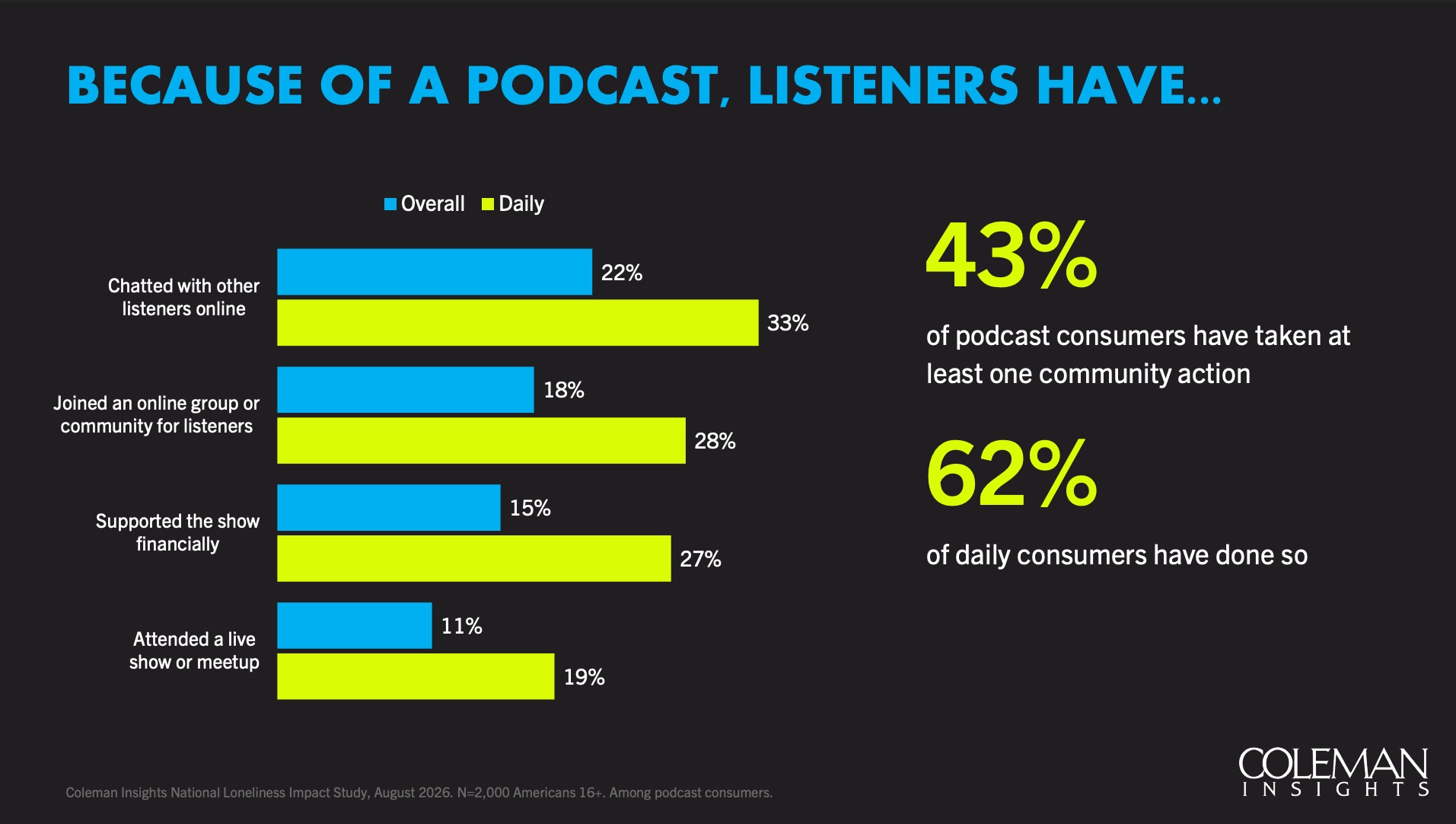
52% of podcast consumers say podcasts help them feel connected to something bigger than themselves.
-
22% have chatted with other listeners online.
-
18% have joined a listener group or community.
-
15% have financially supported a show.
That last statistic is particularly interesting. It demonstrates that some listeners are already willing to pay for something that can provide them with a sense of belonging.
Traditionally, creators try to build bigger audiences so they can generate more revenue through advertising, sponsorships, subscriptions, and other content-based models. But this business model is under increasing pressure as the competition for people's attention escalates.
The real power of community is that it can provide you with an entirely different revenue model.
That's Community Revenue.

When you bring people together around a shared purpose, those relationships and experiences create value beyond the content you produce, opening up opportunities to generate revenue from participation rather than attention alone.
How Do You Turn An Audience Into A Community?
At Podcast Movement, Nachilis offered this advice:
"Create tangible means of listener-to-listener participation."
That's the key difference between an audience and a community. An audience is built around the relationship between the creator and their fans. A community is built around the relationships that fans develop with one another.
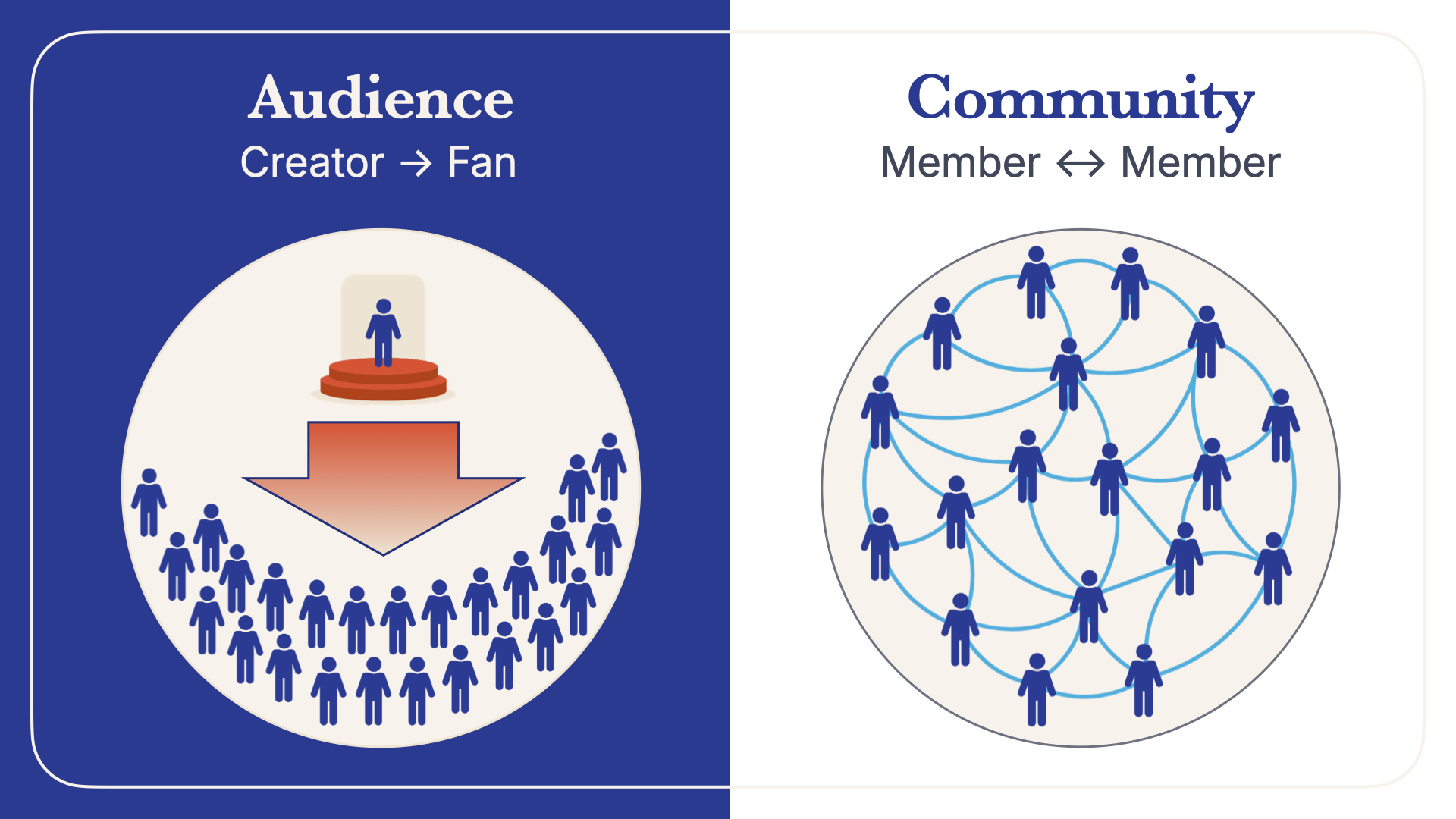
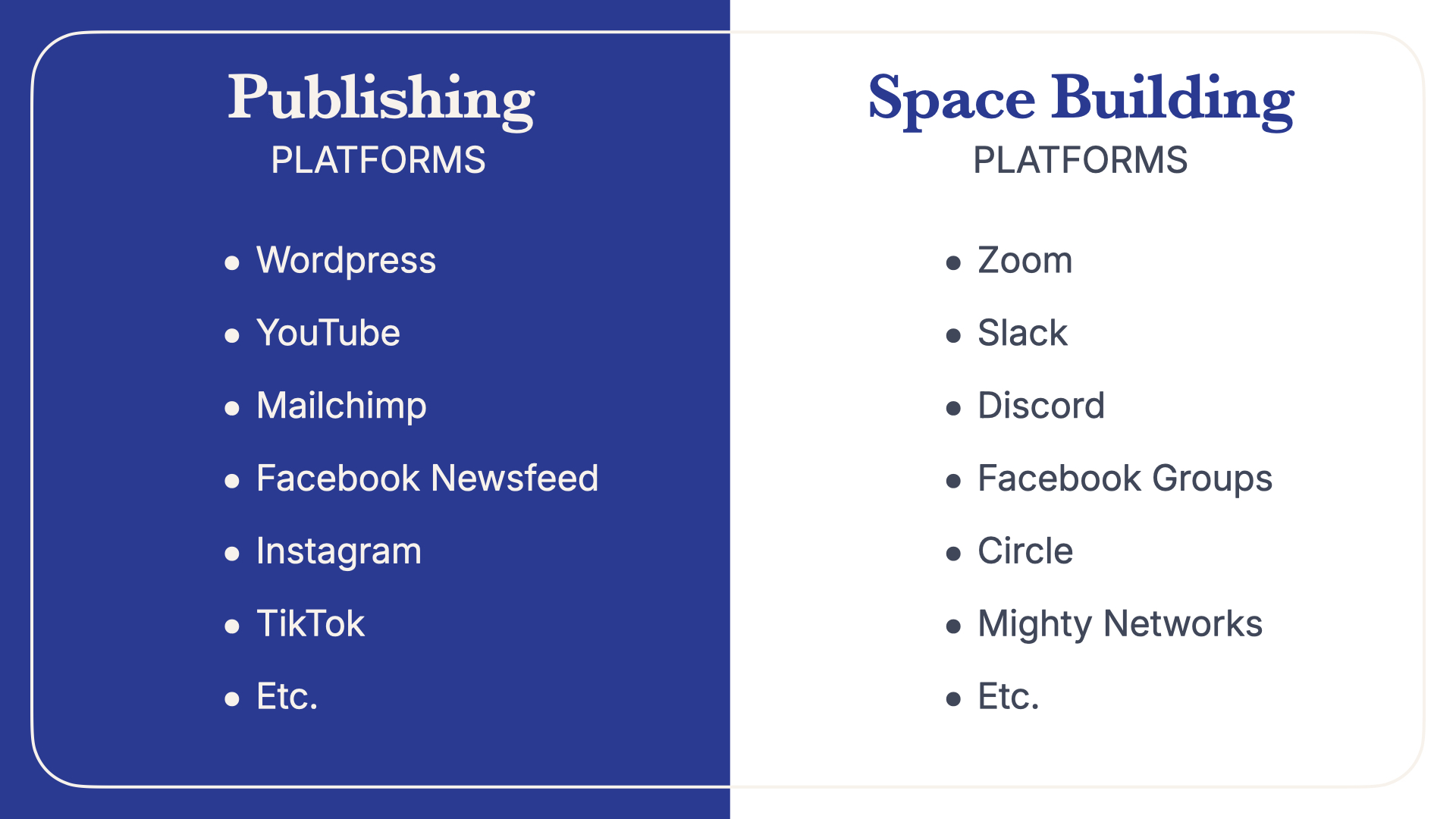
And you can't build a community with content alone. Podcast, video, email newsletter, and social media platforms provide a way for you to reach your fans, but they don't enable your audience members to engage with each other in ways that create meaningful relationships.
To do that, you must create a space where people can connect with one another. That might be an online discussion group, a regular virtual gathering, or an in-person event. These platforms facilitate relationships.
See If Your Audience Is Ready for a Community
So how do you know if your audience members would find value in connecting with one another? They may already be sending you signals. The question is whether you recognize those signs.
Take my free Community Readiness Scorecard to find out if your audience is ready for community and where your biggest opportunities lie:
See If Your Audience Is Showing Signs
Responses